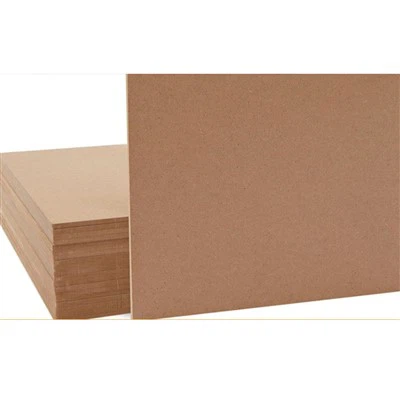
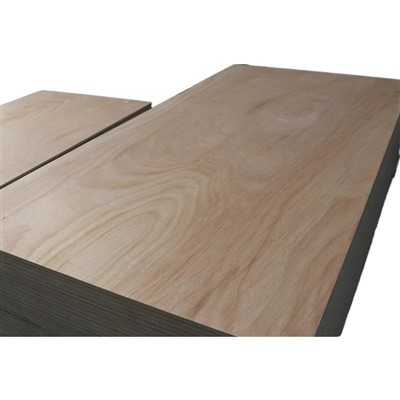
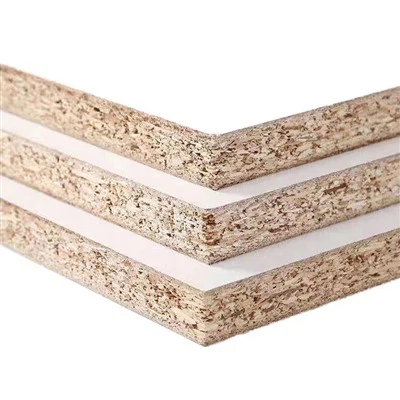
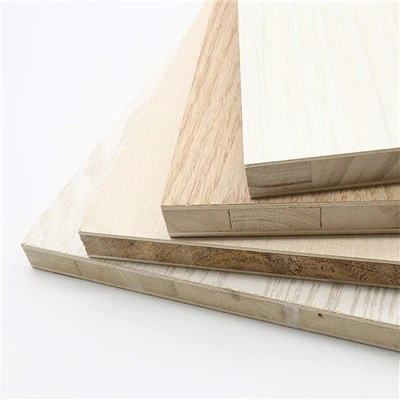
Medium-density fiberboard (MDF) and high-density fiberboard (HDF) are two common engineered wood products, differing significantly in density, structure, performance, and applications. Understanding these differences helps in selecting the right material for your specific needs.
I. Density and Structure
MDF: With a density range of 0.5–0.8 g/cm³, it is a medium-density board. Its fiber structure is relatively fine but loose, with slightly more internal pores. It has a moderate weight and good processing performance, but its strength and load-bearing capacity are moderate.
HDF: With a density range of 0.8–1.2 g/cm³, it has a higher density. Its fiber structure is denser, with fewer internal pores, resulting in a solid board that is heavier and has higher strength and hardness, making it suitable for high-load applications.
II. Manufacturing Process
MDF: During the hot-pressing process, the pressure and temperature are moderate, resulting in uniform fiber distribution without excessive compression, maintaining a certain degree of flexibility in the board.
High-density fiberboard (HDF): Utilizing higher pressure and temperature for hot pressing, the fibers are compressed more tightly, resulting in higher board hardness and a smoother surface.
III. Performance Comparison
Strength and Load-Bearing Capacity: MDF is suitable for light furniture or decorative components, with limited load-bearing capacity; HDF has higher strength and is suitable for flooring substrates, door panels, and other components requiring high wear resistance and load-bearing capacity.
Water Resistance: Ordinary MDF has a higher water absorption and expansion rate, requiring moisture-proof treatment; HDF, due to its higher density, has slightly better water resistance, but still requires surface protection.
Processability: MDF fibers are relatively loose, making it easy to cut and carve, but the edges may be slightly rough; HDF is slightly more difficult to process, but the edges are neater, making it suitable for precision machining.
Surface Treatment: MDF has a smooth surface, suitable for veneer and painting, but requires high coating adhesion; HDF has a smoother surface and stronger coating adhesion, suitable for high-gloss finishes.
IV. Price and Cost
Medium-density fiberboard (MDF): Due to its lower density and relatively simpler raw material and manufacturing process, it is more economical, with ordinary products costing approximately 30-80 yuan per square meter (depending on thickness and brand).
High-density fiberboard (HDF): The manufacturing process is more complex, with a higher degree of raw material compression, resulting in a higher price, approximately 50-120 yuan per square meter.
V. Application Scenarios
MDF: Widely used in furniture panels, decorative panels, partitions, etc., suitable for scenarios with limited budgets or low strength requirements.
HDF: Commonly used in laminate flooring substrates, high-end furniture panels, door panels, and other applications requiring high wear resistance and strength.
VI. Environmental Friendliness
MDF: Formaldehyde emission depends on the quality of the adhesive. Ordinary products can reach E1 grade (≤1.5mg/L), while high-end products can reach E0 grade (≤0.5mg/L) or formaldehyde-free standards.
HDF: Due to the use of more adhesives, formaldehyde emission may be slightly higher, but high-quality brand HDF can also meet E0 grade or higher environmental standards.